Home Insurance in Alberta: Hail, Wildfire, and What You Pay
Loading article…
Home insurance in Alberta costs more than in most provinces, and the reasons are easy to name: hail and wildfire. Calgary sits in what the Insurance Bureau of Canada (IBC) calls Canada's "Hail Alley", and the province has lived through two of the costliest insured disasters in Canadian history. This guide explains what an Alberta policy covers, what households spend according to Statistics Canada, how hail and wildfire shape your premium, and how to compare quotes. For our other guides, start at our insurance hub.
Every figure below comes from Statistics Canada, the IBC, or the Government of Alberta, and each one carries its date. Where no primary source exists, we explain the price factors instead of quoting an invented average.
An Alberta homeowner policy bundles the same four protections as elsewhere in Canada. What changes is how often the covered perils actually happen.
Hail, wind, and fire are typically part of a standard policy. Overland water and sewer backup usually are not, as explained below. Our guide on what home insurance is explains the policy forms.
Statistics Canada's Survey of Household Spending gives the most recent primary figure. For the 2023 reference year, Alberta households spent an average of $1,371 on homeowners' insurance premiums, compared with $1,047 in Ontario, $806 in Quebec, and $1,018 for Canada as a whole (Statistics Canada, table 11-10-0222-01, updated September 18, 2025).
| Region | Homeowners' insurance premiums | Tenants' insurance premiums |
|---|---|---|
| Alberta | $1,371 | $108 |
| Canada | $1,018 | $98 |
| Ontario | $1,047 | $106 |
| Quebec | $806 | $122 |
| British Columbia | $1,039 | $68 |
These averages are spread over all households, including renters who pay no homeowner premium, so they understate what an owner pays. Nationally, owner households spent $1,526 on average in 2023 (table 11-10-0225-01). Statistics Canada does not publish that owner figure by province.
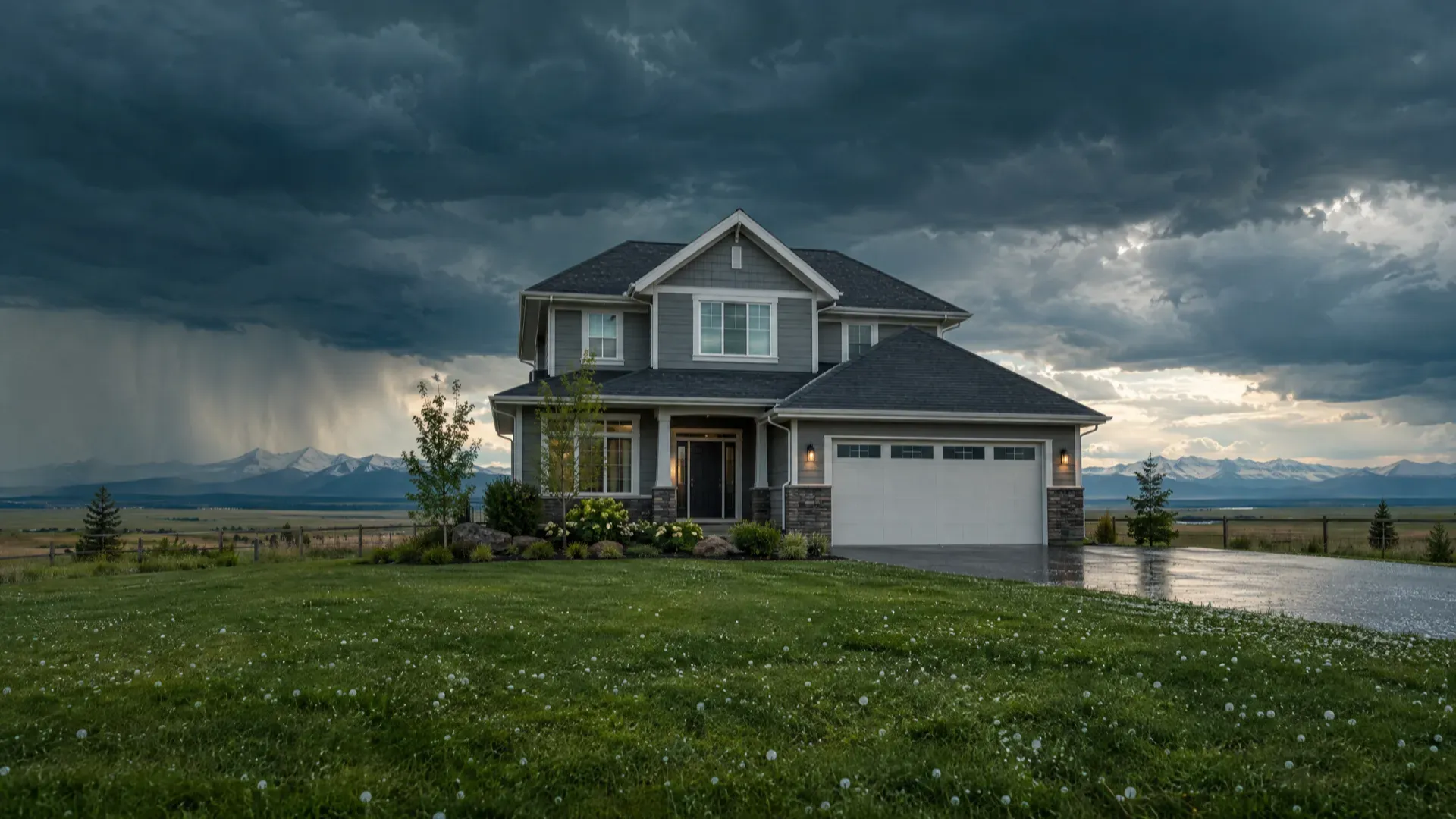
Hail is the single largest reason Alberta premiums run high. The IBC states that many areas of Calgary sit within Hail Alley (IBC, August 14, 2025).
A study by MNP for the IBC, published September 28, 2026, found that hail can account for 30% to 68% of the total homeowner's premium in high-risk areas. The same study found that hail-resistant upgrades may reduce Alberta premiums by up to 50% (IBC, September 28, 2026).
The events below show how often large storms hit the province.
| Event | Date | Insured losses | IBC source date |
|---|---|---|---|
| Calgary hailstorm | June 13, 2020 | Almost $1.2 billion | July 8, 2020 |
| Calgary hailstorm | August 5, 2024 | Over $3.2 billion (revised) | August 14, 2025 |
| Calgary hailstorm | July 13, 2025 | $164 million | September 12, 2025 |
| Prairie storms, including Brooks | August 20-21, 2025 | Over $235 million | December 8, 2025 |
If your roof is due for replacement, ask your insurer and your roofer about impact-resistant roofing before you choose a product. Then ask whether the insurer offers a discount for it, and get the answer in writing. Because hail can make up such a large share of the premium in high-risk areas, the roof is the first place to look for savings.
Fire, including wildfire, is generally a covered peril in a standard home policy. The risk still shapes prices and availability, especially in communities close to forests.
After an evacuation, additional living expenses coverage is the part of your policy that pays for a hotel and meals, subject to your policy's conditions. Keep receipts, and confirm with your insurer what triggers that coverage.
Alberta also has flood exposure along its rivers. A standard policy generally covers sudden water damage from inside the home, such as a burst pipe. The IBC is explicit that sewer backup damage is only covered if you bought that specific optional coverage, and that flood coverage is optional (IBC flooding and insurance). Ask for both prices at your address.
If you rent, our guide on tenant insurance costs in Alberta covers your side of the market.
The Government of Alberta states plainly that, as in other Canadian jurisdictions, property insurance availability and rates are not regulated in Alberta (Government of Alberta fact sheet). Each insurer sets its own price, which is why quotes vary.
Complaints follow a set path. The Superintendent of Insurance handles complaints about insurers, and the Alberta Insurance Council handles complaints about agents, brokers, and adjusters. For home insurance disputes, the province refers consumers to the General Insurance OmbudService (Government of Alberta, insurance complaints).
Compare quotes with the same limits, the same deductible, and the same endorsements. Otherwise, the cheapest quote may simply cover less.
Our reviews of AMA home insurance, TD home insurance, and Square One home insurance cover insurers you can compare, and our insurance comparison tool lets you compare side by side. If you also own property in another province, our guide to home insurance in BC covers the West Coast risks. Keep your deductible in savings; our emergency fund calculator helps you size that cushion.
Home insurance in Alberta is priced around hail first and wildfire second. Check your roof, ask about hail-resistant materials and any separate hail deductible, and add sewer backup and overland water if they are offered at your address. Compare quotes with identical limits every year, because Alberta's storm losses keep moving the market.
To receive our next insurance and money guides, subscribe to the Ratesopedia newsletter.
Hail is the main reason. A study by MNP for the Insurance Bureau of Canada, published September 28, 2026, found that hail can account for 30% to 68% of the total homeowner's premium in high-risk areas. Statistics Canada data show Alberta households spent an average of $1,371 on homeowners' premiums in 2023, more than in Ontario or Quebec. Compare quotes with our insurance comparison tool.
Hail is generally a covered peril in a standard homeowner policy. However, some policies apply a separate or higher deductible to hail and wind, and older roofs can affect how a claim is settled. Read the deductible section of your policy and ask your insurer to confirm. Our AMA home insurance review shows how one Alberta insurer structures its coverage.
Fire, including wildfire, is generally covered by a standard home policy, and additional living expenses coverage can pay for a hotel and meals if a covered loss forces you out. Conditions apply, so confirm with your insurer what triggers that coverage. Our guide on what home insurance is explains the main coverages.
Overland water and sewer backup coverage are optional endorsements, according to the Insurance Bureau of Canada. Availability and price depend on your address. Ask your insurer or broker for a quote with both endorsements, and compare offers through our page on home insurance quotes.
Each insurer sets its own home insurance prices. The Government of Alberta states that property insurance availability and rates are not regulated in the province. The Superintendent of Insurance handles complaints about insurers, and the province refers home insurance disputes to the General Insurance OmbudService. Read our insurance hub for related guides.
Start with the roof: the IBC-commissioned MNP study found hail-resistant upgrades may reduce premiums by up to 50%. Then raise your deductible only to an amount you can pay from savings, ask about bundling and claims-free discounts, and compare at least three quotes with identical limits. Our emergency fund calculator helps you set a deductible you can afford.
Read next

Our reviews and rankings are based on an objective assessment. Advertisers do not influence our content. We may receive compensation through some links; our analysis and opinions remain independent.