Personal Loan vs Line of Credit vs Balance Transfer: Which Costs Less?

Loading article…
A personal loan, a line of credit and a balance transfer card can all pay off the same $10,000, but they do not cost the same. The cheapest choice depends on how fast you can repay and how disciplined you are with available credit. Below, we price all three on the same debt, with rates read on October 18, 2026, so you can see where each one wins. For the full range of borrowing products, see our loans hub.
You borrow a lump sum and repay it in equal payments over a fixed term. The rate can be fixed or variable, but the schedule is set from day one, so the debt is gone on a known date. Banks quote personal loans from their prime rate, which is 4.45% as of October 18, 2026. Online lenders charge much more for weaker credit files, up to the 35% legal ceiling. Our comparison of the best personal loans in Canada covers lenders and published ranges.
A line of credit is revolving credit. You get a limit, you draw what you need, and you pay interest only on what you use. The rate is variable: prime plus a margin set by the lender according to your credit. For example, Tangerine prices its personal line of credit at its prime rate plus an adjustment factor, with a 2.99% promotional rate for the first 3 months, and no annual fee.
The flexibility cuts both ways. Most lines only require an interest-only or small minimum payment, so the balance can stay put for years if you let it.
A balance transfer moves existing card debt to a new card with a low promotional rate, often 0%, for a set period. You usually pay a transfer fee up front. When the promotion ends, any remaining balance switches to the card's regular balance transfer rate.
Two examples from our card data, updated September 14, 2026:
We modelled a $10,000 card balance repaid with the same monthly payment of $322.67, which is what a 3-year personal loan at 10% costs. The line of credit rate of 7.45% is an example (prime of 4.45% plus a 3-point margin); your own margin depends on your credit.
| Option | Rate used | Upfront fee | Months to repay | Total cost (interest + fees) |
|---|---|---|---|---|
| Personal loan, 3 years | 10% fixed | $0 | 36 | $1,616 |
| Line of credit (example) | 7.45% variable (prime + 3) | $0 | 35 | $1,141 |
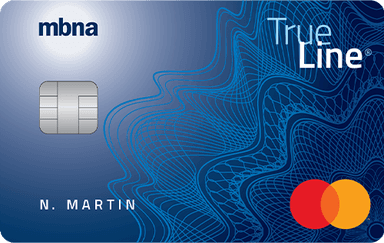
| MBNA True Line Mastercard balance transfer | 0% for 12 months, then 17.99% | $300 (3%) | 36 | $1,565 |
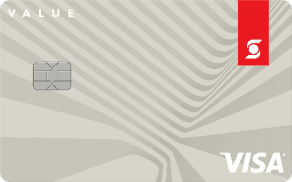
| Scotiabank Value Visa balance transfer | 0% for 9 months, then 13.99% | $100 (1%) | 35 | $1,286 |
| Stay on a standard card | 20.99% | $0 | 46 | $4,534 |
The line of credit costs the least on paper, but only because you keep paying $322.67 every month. With a minimum payment instead, it can cost far more than the loan.
The balance transfer is the best deal only if you pay it off during the promotion. To clear the MBNA balance in 12 months, you would need about $858 a month. At that pace, your only cost is the $300 transfer fee. At $322.67 a month, most of the balance rolls over to 17.99%, and the saving over a personal loan shrinks to about $50.
Doing nothing is the expensive choice. The same $10,000 left on a card at 20.99%, a common rate on standard cards, takes 46 months and about $4,534 of interest to repay at $322.67 a month.
To compare payoff dates with your own numbers, use our debt payoff calculator. Before you apply for anything, check where you stand with our guide to checking your credit score in Canada.
There is no single winner. A balance transfer is the cheapest tool for debt you can wipe out within a year. A line of credit is the most flexible, and the most dangerous if you only pay the minimum. A personal loan costs a bit more on paper but guarantees that the debt disappears on schedule, which is often worth more than the rate difference. To compare promotional offers, start with our ranking of the best balance transfer credit cards.
Get new rate comparisons and guides in your inbox every week: subscribe to the Ratesopedia newsletter.
Often yes on the rate, since banks price unsecured lines close to prime plus a margin. The real cost depends on your repayment habits, though. A line of credit only requires a small minimum payment, so the balance can linger for years and cost more in total than a loan with a fixed end date. Test both scenarios with our debt payoff calculator.
Applying for a new card triggers a hard inquiry, which can lower your score slightly for a while. Moving the debt does not change the total you owe, but a new card adds available credit, which can lower your utilization ratio over time. Paying the balance down steadily is what helps your score the most. Read our guide on how to build your credit score in Canada.
Any balance left at the end of the promotion is charged the card's regular balance transfer rate, for example 17.99% on the MBNA True Line® Mastercard® according to our card data. Most issuers also cancel the promotion if you miss a payment. Plan to repay the full amount before the end date, and note that date in your calendar.
Yes, and it is one of the most common uses. The loan replaces several card balances at around 20% or more with one fixed payment at a lower rate, if your credit qualifies. The key is to stop adding new purchases to the cards you paid off. Our comparison of the best personal loans explains which lenders to try first.
Banks tend to apply similar criteria to both, based on your credit score, income and existing debts. An unsecured line of credit usually requires stronger credit, because the lender commits to an open limit. Online lenders approve more personal loans for fair credit, at much higher rates. Know your credit score range before you apply.
Read next

Our reviews and rankings are based on an objective assessment. Advertisers do not influence our content. We may receive compensation through some links; our analysis and opinions remain independent.